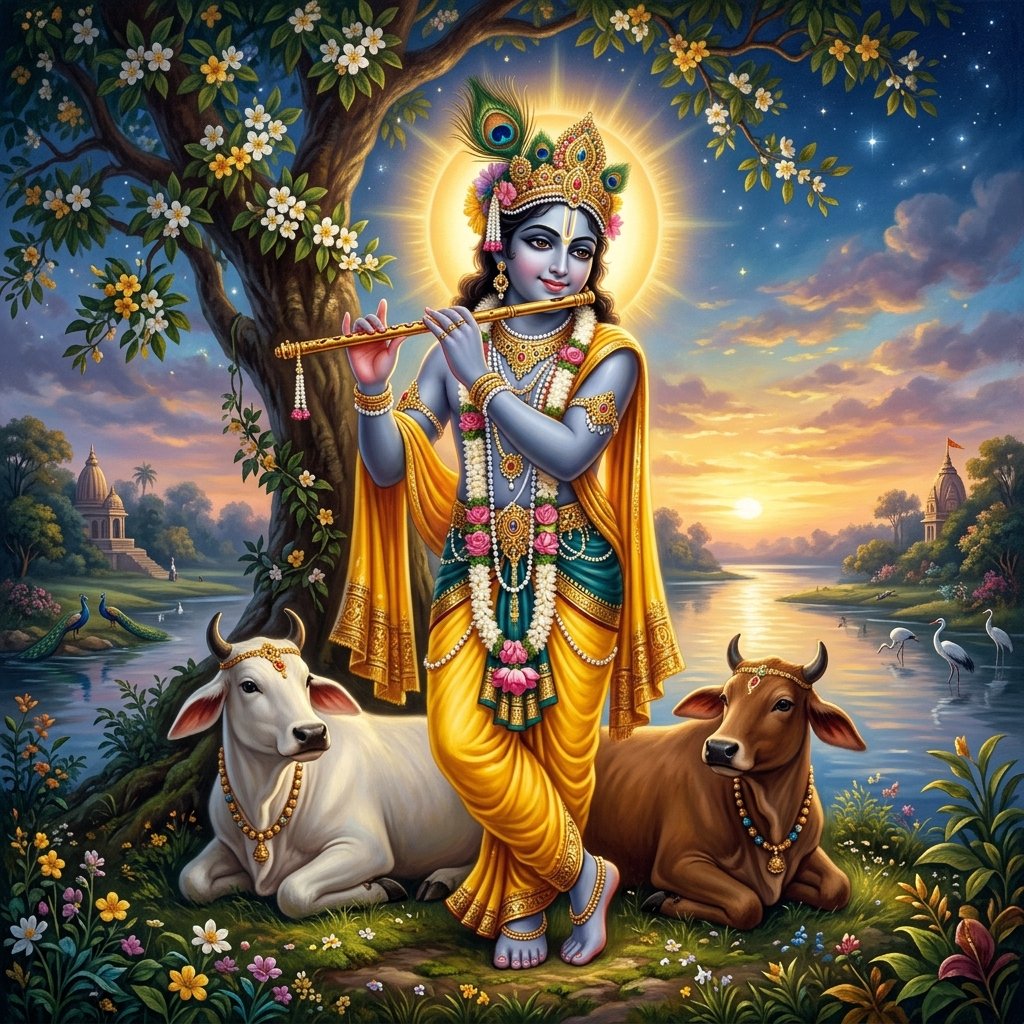
Chapter 5: Karma Sanyasa Yoga
Core Theme: Renunciation of ego in action versus renunciation of worldly duties.
Chapter Overview & Background
Key Verses of the Chapter
Lessons for Daily Life
- • Seeing the same consciousness in all beings is the highest point of true knowledge.
- • Letting go of inner attachment matters far more than merely withdrawing from outer objects.
- • Supreme peace belongs only to one who is wholly free of attachment, aversion, and anger.
🥔 In Prabhu Vandan's View: Renunciation Means Inner Detachment, Not Outer Escape
Chapter five answers a question that still occupies many minds today — does a spiritual life require giving up the world entirely? Krishna's answer is clear: Karma Yoga and Jnana Yoga ultimately arrive at the same destination, and for most people, remaining active while staying unattached is a far more natural and meaningful path than retreating into isolation.
The lotus-leaf image is especially useful here — the leaf lives in water yet is never wet by it. Our professional and family lives need exactly this same balance: fully committed engagement with the work itself, without tying the outcome so tightly to our self-worth that a single failure shakes the whole person.
One of the deeper lessons of this chapter is that outer renunciation — keeping the senses away from their objects — stays incomplete until attachment dissolves from within the mind. That is precisely why simply changing habits rarely brings lasting peace — until the inner pull itself changes, outer change remains temporary.
Daily 108 Mantra Japa Practice
Chant with the digital 108 japa counter, styled after an authentic Rudraksha mala.