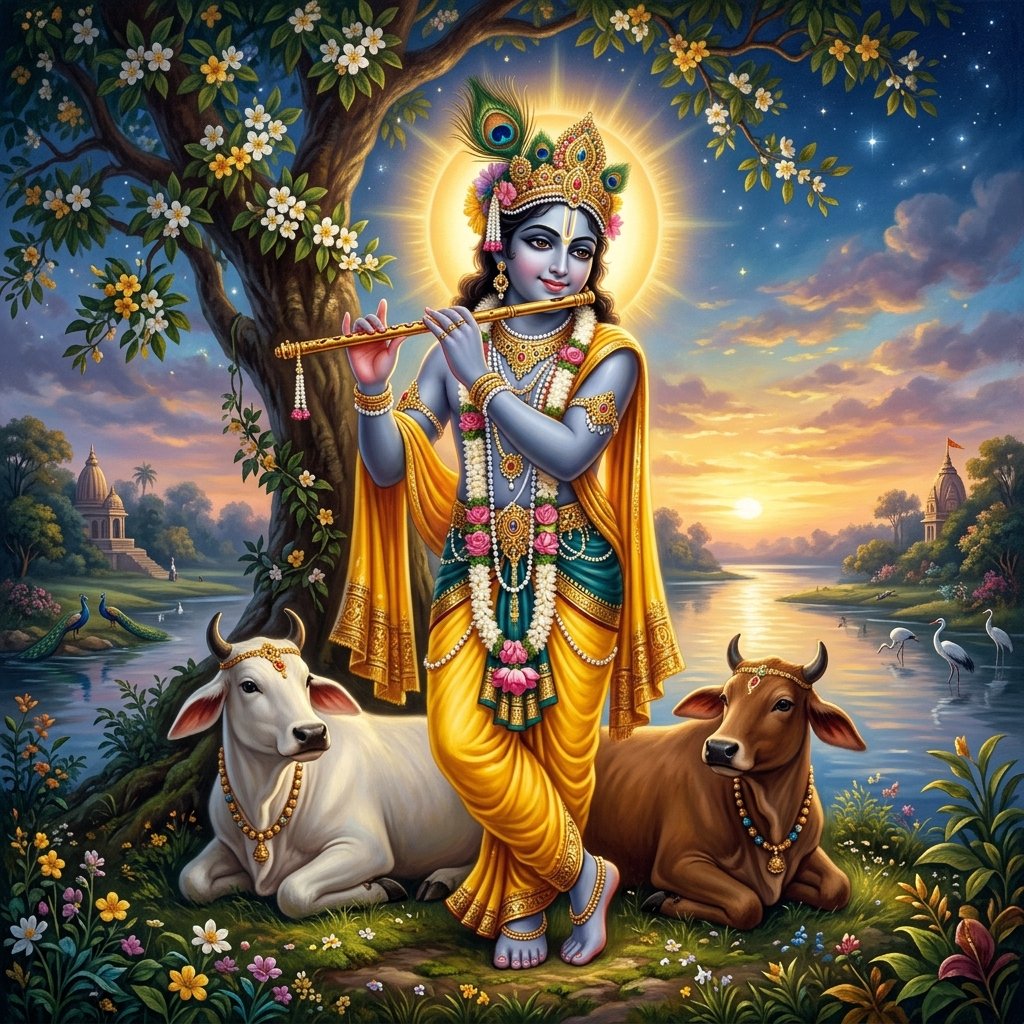
Chapter 13: Kshetra Kshetragya Vibhaga Yoga
Core Theme: The field of the body and mind, and the conscious Knower of the field.
Chapter Overview & Background
Key Verses of the Chapter
Lessons for Daily Life
- • We are not this perishable body, but the eternal consciousness that illumines it.
- • True knowledge arrives in life only through humility, freedom from ego, and mastery of the senses.
- • Seeing the one undivided Divine amid all diversity is the very gateway to liberation.
🥔 In Prabhu Vandan's View: I Am Not the Body — I Am the One Who Watches It
The distinction in chapter thirteen between "kshetra" (the body) and "kshetrajna" (the consciousness that knows it) is an idea whose practical value lines up remarkably well with modern understanding of mental health. When we fuse our entire identity with our thoughts, emotions, or circumstances — "I am an angry person," "I am a failure" — we mistake a temporary experience for our permanent nature.
The Gita introduces here a form of witness consciousness — the idea that we are the awareness that observes and experiences the body, mind, and circumstances, while remaining distinct from them. This outlook is genuinely useful in difficult moments — illness, failure, or criticism — for creating a healthy distance: not the distance of denial, but the distance of clarity.
It's also meaningful that among the twenty means to knowledge, humility (amanitva) and freedom from hypocrisy (adambhitva) are listed first — showing that the journey of self-knowledge begins not with intellectual achievement but with humility. The smaller we make our own "I," the more clearly we're able to recognize the consciousness we actually are.
Daily 108 Mantra Japa Practice
Chant with the digital 108 japa counter, styled after an authentic Rudraksha mala.