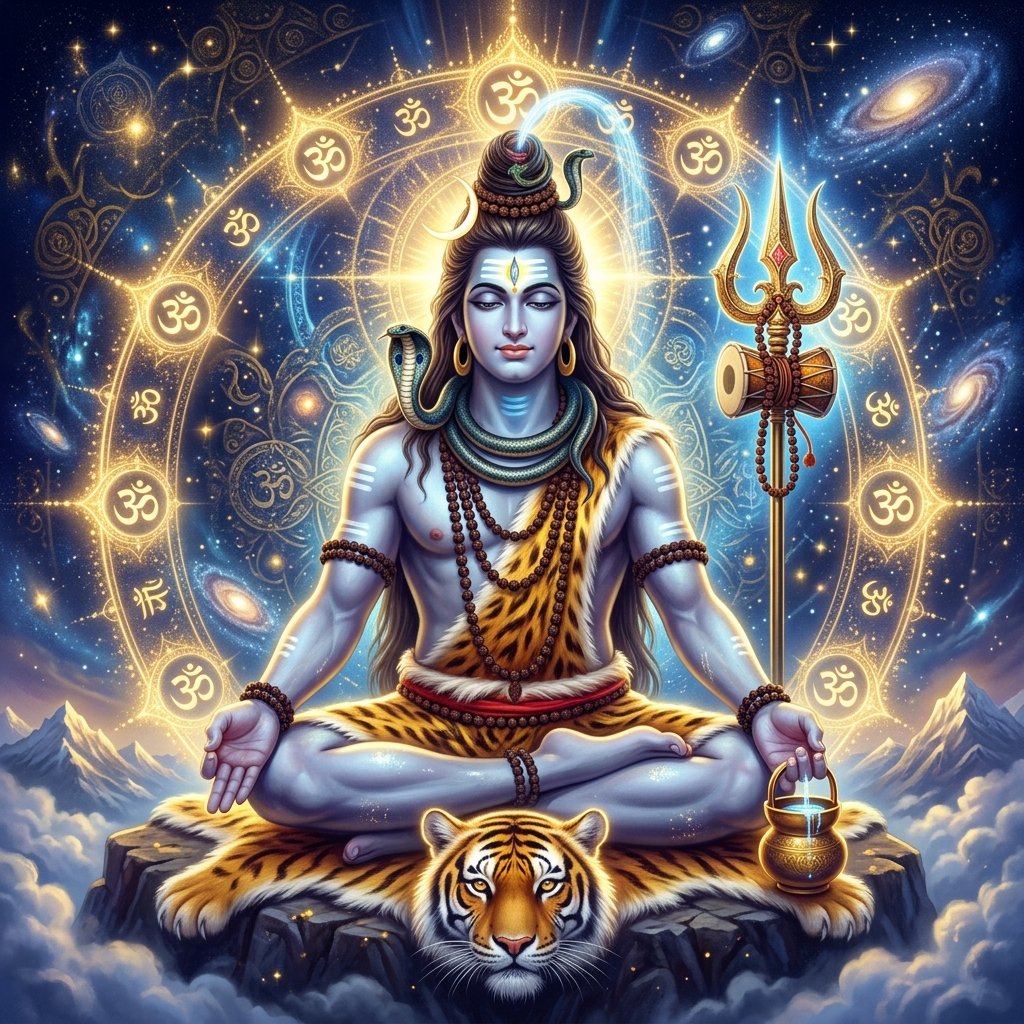
Maha Mrityunjaya Mantra in English
Rigveda 7.59.12 • Great Death-Conquering Healing Chant
The Maha Mrityunjaya Mantra (also known as the Tryambakam Mantra or Rudra Mantra) is an ancient verse from the Rigveda (7.59.12) and Yajurveda. Revealed to Rishi Markandeya, it is revered as the ultimate life-saving, fear-dispelling, and health-rejuvenating chant in the Vedic treasury.
Om Tryambakaṃ Yajāmahe Sugandhiṃ Puṣṭi-vardhanam ।
Urvārukam-iva Bandhanān Mṛtyor-mukṣīya Māmṛtāt ॥
Meaning: Om! We worship and adore the Three-Eyed Lord Shiva (Tryambaka), who is fragrant with transcendental virtues and who nourishes and sustains all life. Just as a ripe cucumber is severed effortlessly from its binding vine, may He liberate us from the bondage of mortal death, and not from the nectar of immortality!
Tryambakam: The Three-Eyed Lord (representing past, present, and future; sun, moon, and fire)
Yajamahe: We worship, adore, and honor with reverent devotion
Sugandhim: The fragrant one, possessing sweet spiritual aroma
Pushti-vardhanam: The nourisher, who sustains vitality and spiritual strength
Meaning: Acknowledging Lord Shiva as the all-nourishing source of life and cosmic balance.
Urvarukam: A ripe cucumber / melon
Iva: Just as, like
Bandhanat: From the bondage of the stem
Mrityor: From physical and spiritual death
Mukshiya: May You liberate and release us
Ma: Not
Amritat: From the nectar of immortality / liberation
Meaning: The poignant metaphor of natural detachment: seeking liberation from decay and death while remaining firmly anchored in supreme, immortal reality.
🌸 Spiritual Significance & Philosophical Meaning
Just as a ripe cucumber naturally detaches itself from the vine without pain when mature, this mantra prays that the seeker may be liberated gracefully from the bondage of mortal fear, disease, and death (Samsara) into the immortal consciousness of Lord Shiva.
🪔 Ritual Vidhi & Chanting Benefits
Recited 108 times using a Rudraksha mala, especially on Mondays or during times of illness, surgery, or psychological distress. It accelerates cellular healing, alleviates stress, and promotes longevity (Aayushya Vardhana).
💡 Frequently Asked Questions (FAQs)
❓ What is the legend behind the Maha Mrityunjaya Mantra?
The young sage Markandeya was fated to die at age 16. Embracing the Shiva Lingam while chanting this mantra, when Yama (the god of death) arrived with his noose, Lord Shiva emerged in radiant fury, stopped Yama, and blessed Markandeya with eternal youth and immortality.
❓ How many times should it be chanted for healing?
A continuous round of 108 repetitions with a pure Rudraksha mala daily creates a powerful biofield shield that accelerates convalescence.
🪔 In Prabhu Vandan's View: Facing Mortality Instead of Avoiding It
The Maha Mrityunjaya Mantra deals directly with death and fear, and that is precisely what makes it unusual. Rather than avoiding the subject, it addresses it head-on: "mrityor mukshiya maamritat" — free us not from death itself, but from the fear that binds us to it.
Notice the distinction carefully — the mantra doesn't promise that death will never come. It asks for release from the fear of it. That difference matters more than it might first appear: this is not a wish for endless life, but a request for the courage to live fully despite mortality, rather than a reassurance that mortality can be avoided.
This ancient Rig Vedic verse carries a practical, almost psychological insight — a person who has made peace with the fact of impermanence tends to live with more clarity, courage, and purpose than one who spends their energy avoiding the thought of it altogether.
📿 Chant with Digital 108 Japa Counter
Enhance your daily meditation and japa sadhana with our interactive 108 beads japa counter.
Open 108 Japa Counter →