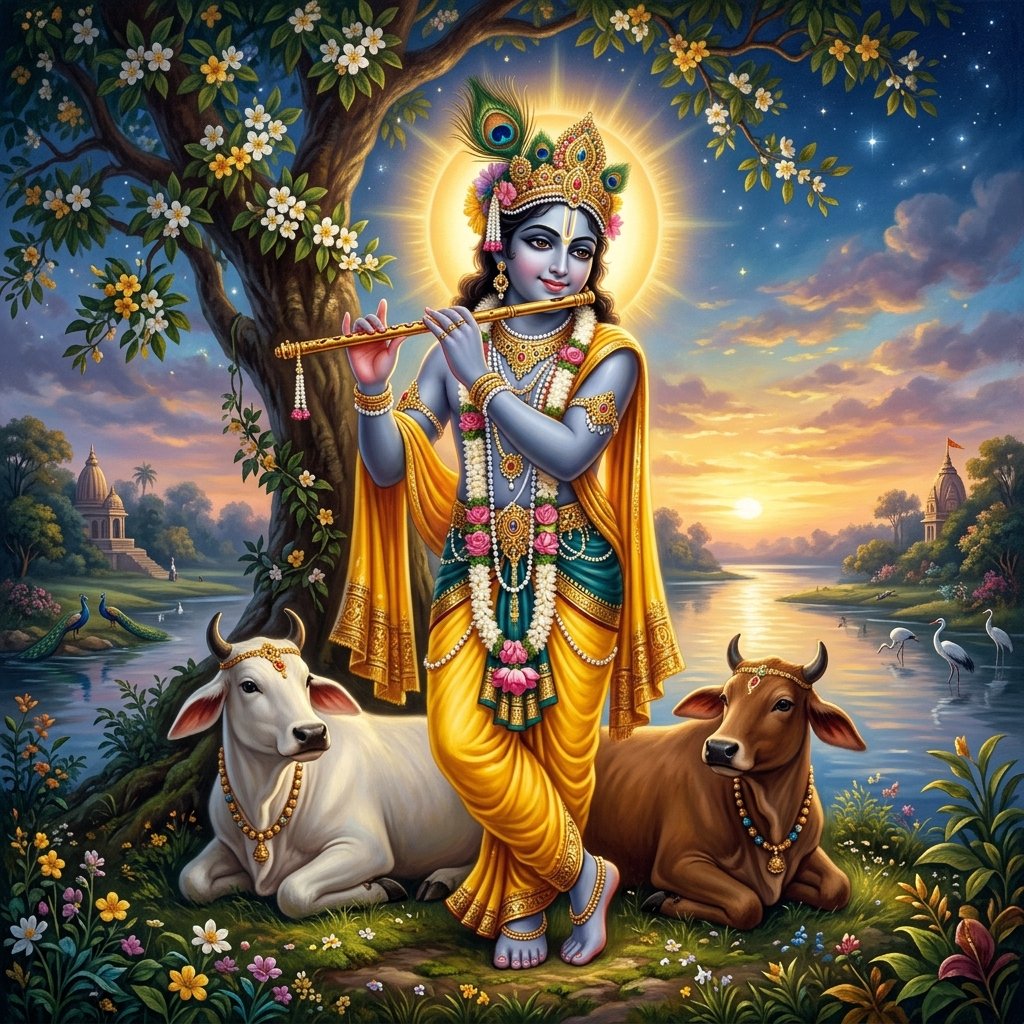
Chapter 3: Karma Yoga
Core Theme: The path of dedicated, selfless action without attachment to fruits.
Chapter Overview & Background
Key Verses of the Chapter
Lessons for Daily Life
- • Following one’s own nature and duty (swadharma) is far more worthy than imitating another’s path.
- • The cycle of creation itself rests on mutual cooperation and the spirit of sacrifice (yajna).
- • Govern the senses, mind, and intellect to conquer the great enemies of desire and anger.
🥔 In Prabhu Vandan's View: Escaping Action Is Impossible, So Direction Is the Real Choice
Chapter three opens with a thoroughly practical truth — no one can remain inactive even for an instant. That fact feels even more relevant today, when "doing nothing" has itself become an active choice — whether that's scrolling social media or simply postponing a decision.
Here Krishna gives renunciation an entirely new meaning — not giving up action, but giving up the ego and the "I did this" behind it. That lens is just as relevant at a modern workplace as it was on a battlefield. When we tie our work too tightly to our identity or the credit it earns us, failure breaks us and success inflates the ego. But when action is approached as a yajna — a contribution made toward collective good — that same action becomes a path to freedom rather than bondage.
The most practical lesson of this chapter is that following one's own nature (swadharma) beats copying someone else's path. In today's age of constant comparison, where we measure ourselves against everyone else's success, this message points us back toward making an honest effort suited to our own nature and circumstances.
Daily 108 Mantra Japa Practice
Chant with the digital 108 japa counter, styled after an authentic Rudraksha mala.